How Far Apart Should Landscape Path Lights Be?
For many residential landscapes, placing path lights roughly 8 to 10 feet apart is a useful starting point. It is not a rule. The right spacing depends on the fixture, the width and shape of the path, surrounding planting, nearby architectural light and the visual rhythm you want to create.
Start around 8 to 10 feet, then design from the landscape
A measured starting interval keeps fixtures from accumulating too quickly and helps avoid the runway effect created by tightly spaced lights marching down both sides of a walk.
From there, adjust. A curve, planting bed, step, gate or architectural feature may justify moving a fixture closer or farther away.
Avoid the runway effect
Perfectly opposing fixtures at short, repetitive intervals can make a residential walkway feel more like commercial circulation than a garden. In many landscapes, alternating or staggered placement feels more natural.
The objective is not to outline every inch of the path. It is to provide enough guidance to move comfortably while allowing the landscape to remain part of the experience.
Let the fixture's light pattern influence spacing
Two path lights can have very different distributions even when they use similar wattage. Shade shape, fixture height and optics affect where the light actually lands.
This is why spacing should be evaluated after dark whenever possible. Move or temporarily position fixtures before committing to final placement.
Use surrounding light to your advantage
A walkway near a warmly lit entry, step light or illuminated wall may need fewer path fixtures than an isolated garden walk. Layers should cooperate rather than duplicate one another.
If another source is already doing the job, leaving a little darkness can make the overall composition stronger.
Curves and planting create natural placement cues
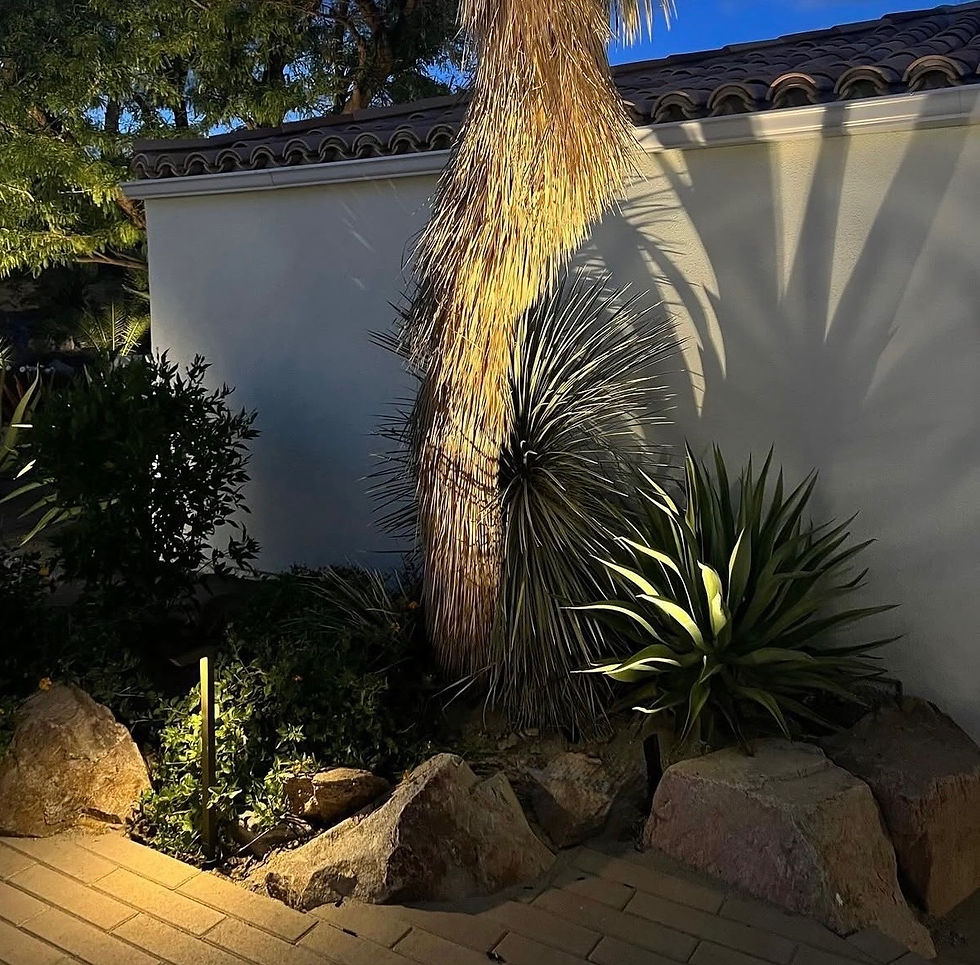
On a curved path, place lights where they help describe the change in direction rather than forcing an exact numerical interval. In planting beds, position fixtures so they feel integrated with the landscape in daylight and illuminate the walking surface at night.
What about wide paths?
A wider walk may need light from both sides, but that does not automatically mean symmetrical pairs. Consider staggered placement first and evaluate whether the light reaches the center of the path comfortably.
The final test happens at night
Landscape lighting is spatial. A plan that looks perfectly even on paper can feel overlit once the fixtures are on. Begin with a considered layout, then make final spacing and aiming decisions after sunset.


Comments