What Type of Landscape Lights Do I Need?
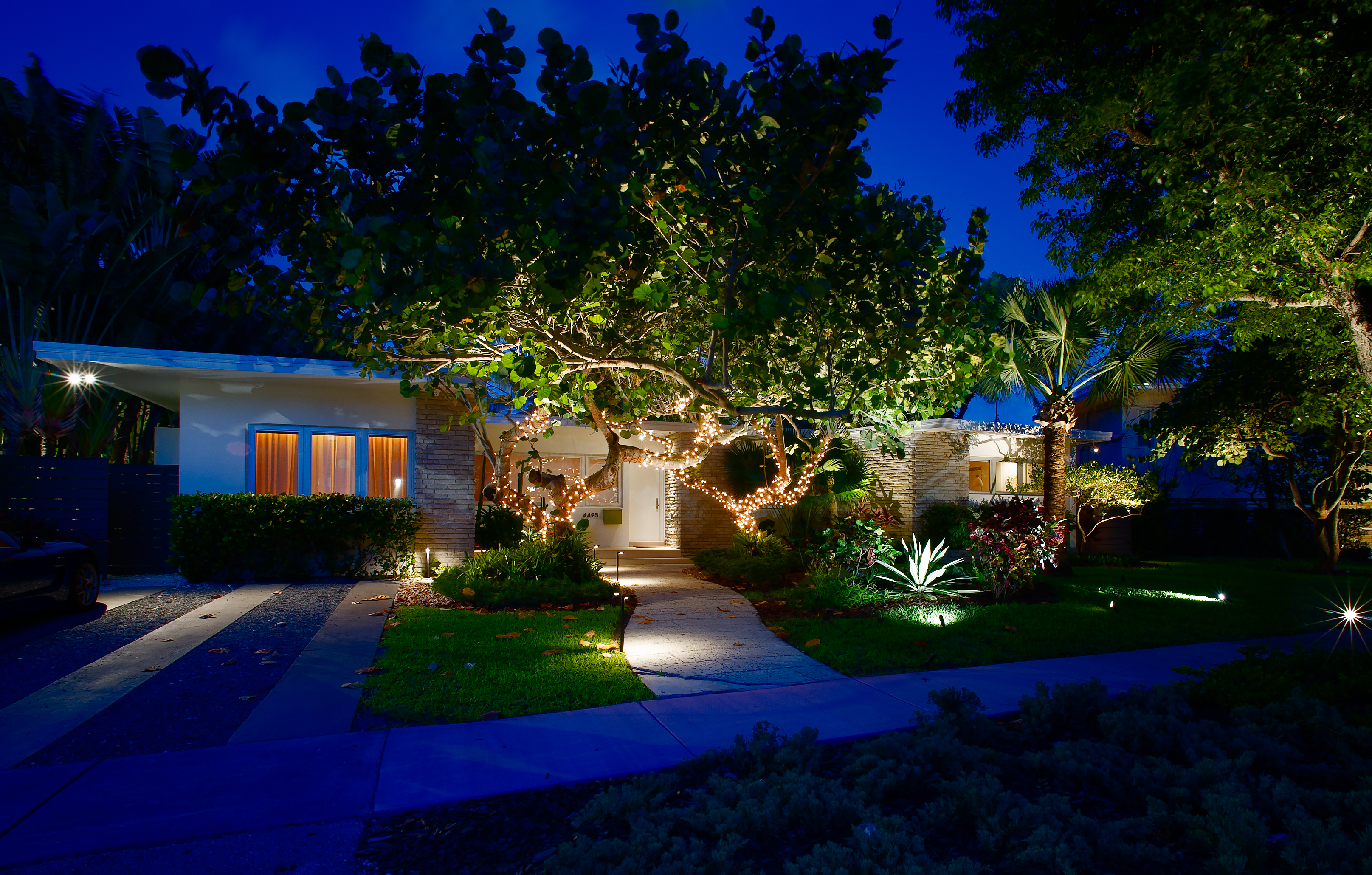
A good lighting plan begins with the effect you want, not a list of fixtures. Most residential landscapes can be understood through a handful of complementary lighting types.
Path and area lights: gentle guidance
Path lights illuminate walking surfaces and adjacent planting. Use them at entries, garden walks and changes in direction rather than outlining every edge of the property. Shade geometry and light distribution influence how many fixtures a path actually needs.
Directional and wash lights: selective emphasis
Directional fixtures bring attention to trees, planting, walls and architectural details. A tighter beam can isolate a feature; a broader distribution can reveal a wider surface. Select the optic and output to suit the subject rather than choosing by wattage alone.
In-ground and well lights: discreet uplighting
An in-ground fixture can illuminate a tree or architectural feature while minimizing visible hardware. These are useful where planting is sparse or where a fixture should visually recede. Placement, drainage and service access deserve particular attention.
Step, deck and hardscape lights: integrated illumination
Step and hardscape lights introduce light into the built environment. They can make level changes easier to read and bring subtle definition to seating walls, stairs and outdoor living areas. Avoid making every step or wall compete for attention.
Layer the effects instead of repeating one type
A home with only path lights may feel flat. Combining gentle path illumination with selective tree and architectural accents creates depth. Often one well-placed accent light makes more visual difference than several additional path fixtures.
Build a system around the design
Once the fixture types and approximate quantities are chosen, total their connected wattage and select the transformer and cable layout. As a simple starting point, Centurion recommends connected fixture wattage no greater than about 80% of transformer capacity, with run length and wire gauge evaluated separately.
Materials matter in daylight too
Landscape fixtures remain visible when switched off. Centurion crafts its landscape fixtures in solid brass or copper in Southern California, with finishes selected to sit comfortably within the home's material palette.
Explore Centurion Landscape Lighting
Browse Centurion path, directional, in-ground and step lighting. Visit https://www.centurionlighting.com/landscape-lighting


Comments