How to Uplight Trees: A Homeowner's Landscape Lighting Guide
A beautifully lit tree gives a garden depth after sunset. The effect comes from choosing what to reveal, not simply placing the brightest fixture beneath the trunk.
Begin with the tree's form
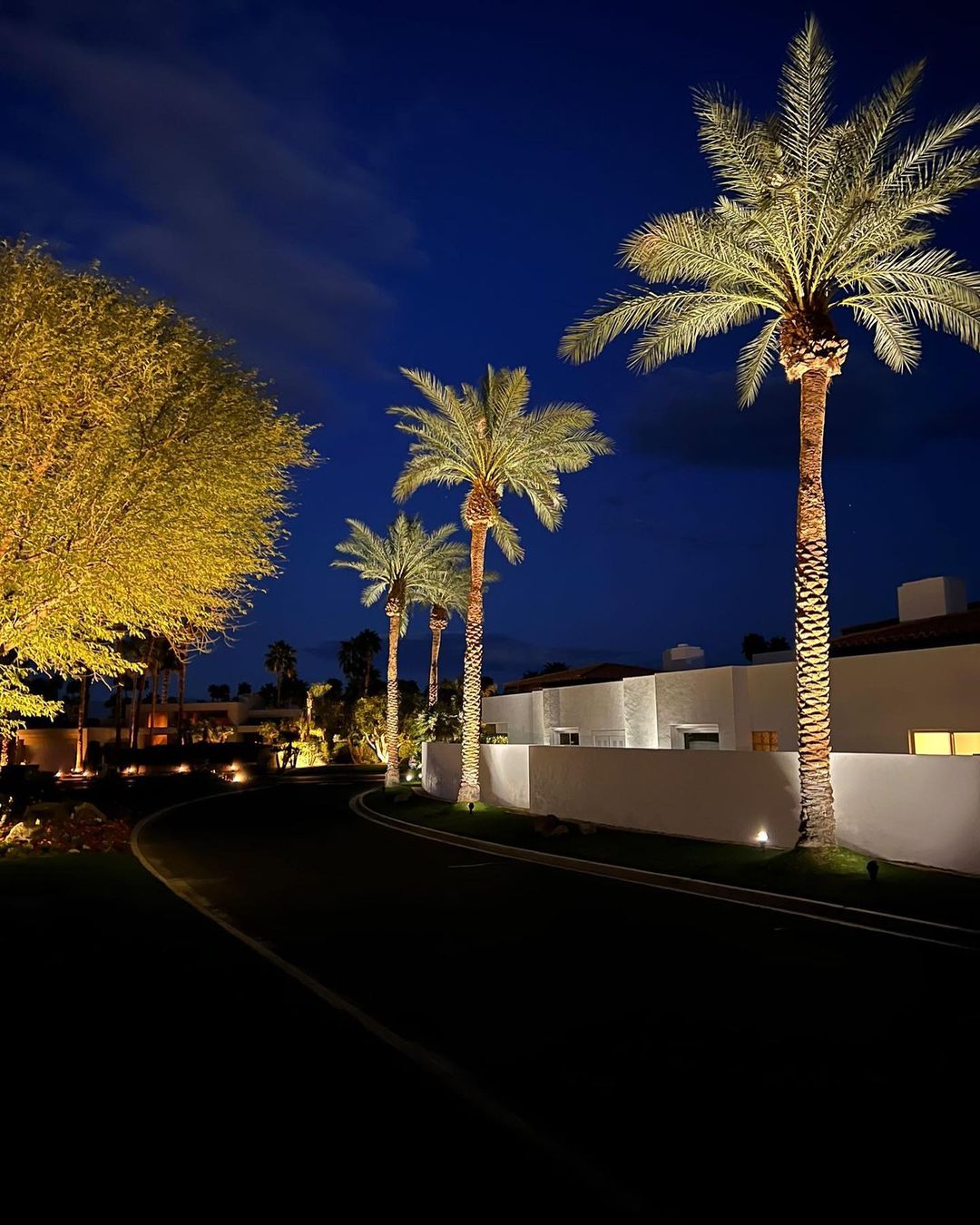
A slender palm, an open-branched olive and a broad mature canopy ask for different lighting. Look at trunk texture, branching, canopy density and the principal viewing angle from the home or garden. Decide whether you want to emphasize the trunk, the canopy, or the complete silhouette.
Choose directional or in-ground uplighting
Adjustable directional lights offer flexibility in placement and aiming, especially in planting beds. In-ground lights keep the hardware discreet where a visible stake fixture would interrupt paving or the landscape. Neither is universally better. Choose based on the scene and the installation surface.
How many uplights does a tree need?
A small tree may look beautiful with one carefully positioned fixture. A larger tree or broad canopy may benefit from two or more viewing angles. There is no reliable fixture count based on tree height alone: optics, output, foliage density, viewing distance and surrounding ambient light all matter.
Position to reveal texture without glare
Start with temporary fixture placement and observe the tree from the windows, paths and seating areas where people will see it. Moving a light away from the trunk can change the balance between bark and canopy illumination. Avoid aiming toward windows or into a person's direct line of sight.
Choose output and beam spread together
Wattage is not a distance rating. Beam angle, light output, intensity and placement determine how effectively a fixture reaches the intended feature. Centurion's lower-output directional options suit smaller features, while higher-output options can be considered for larger trees and architecture. Verify the actual fixture specifications before selecting.
Keep the color of light considered
Both 2700K and 3000K are warm-white options. Centurion favors 2700K for a soft residential atmosphere and its relationship with natural materials. Consistency across the landscape often matters more than a small difference in color temperature.
Test after sunset
Before burying cable or finalizing aiming, power the proposed fixtures and view the scene at night. The best result often uses less light than expected. Leave darkness around the tree so its illuminated form has room to stand out.
Explore Centurion Landscape Lighting
Explore Centurion directional and in-ground landscape lighting. Visit https://www.centurionlighting.com/landscape-lighting


Comments