In-Ground vs Directional Landscape Lights: Which Should You Choose?
Both in-ground and directional fixtures can beautifully illuminate trees, planting and architecture. The more useful question is which fixture belongs in the setting, how much aiming flexibility you need, and what the finished landscape should look like in daylight.
What is a directional landscape light?
A directional fixture is generally mounted above grade, often on a stake or appropriate mounting accessory, with an adjustable head aimed toward the subject. It offers flexibility in a planting bed and can be repositioned as the landscape grows.
What is an in-ground landscape light?
An in-ground or well fixture sits within the ground or another approved installation surface. Its low profile can preserve clean sightlines, particularly around architectural paving or minimal planting. Different models offer different degrees of aiming adjustment.
Choose by visibility and composition
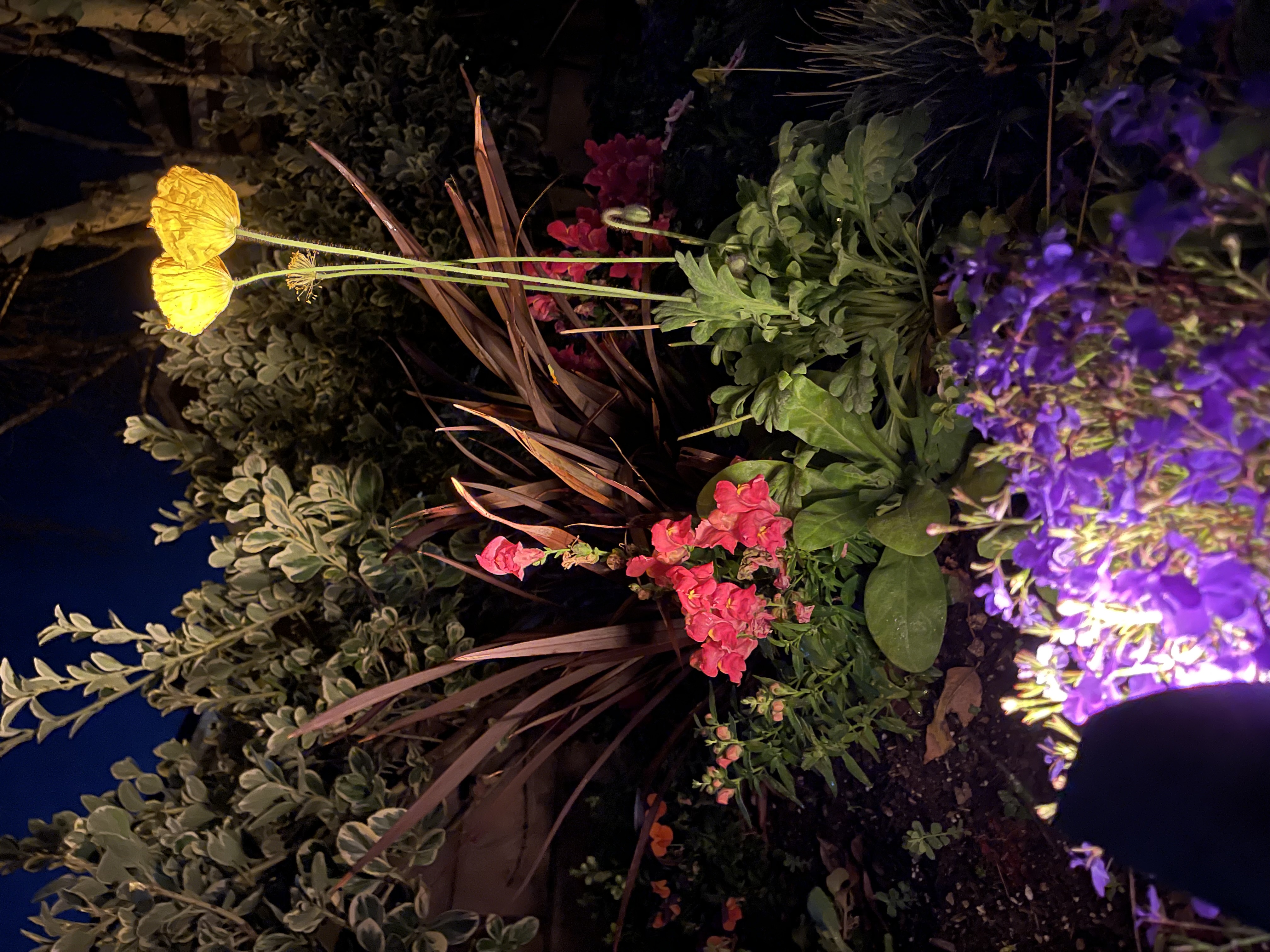
Where lush planting conceals a small directional fixture, an above-grade light may be the simplest and most adaptable choice. Where the hardware would be prominent in a clean architectural setting, an in-ground option may be visually preferable.
Think about drainage and maintenance
In-ground fixtures demand special attention to manufacturer installation requirements, water management, debris accumulation and future access. Above-grade fixtures may be easier to reposition and service in planted areas. Neither style should be installed contrary to its rated use.
Compare aiming flexibility
Aiming is central to beautiful accent lighting. Directional fixtures typically make it easier to change angle as a tree grows or the composition evolves. If using an in-ground light, check whether the selected model is fixed or adjustable and whether its beam reaches the intended feature.
Compare light output, not just fixture shape
A recessed fixture is not automatically stronger or weaker than an above-grade directional. Evaluate actual light output, optics, beam spread and intensity for the desired tree, wall or feature. Wattage by itself is not a reliable measure of reach.
When a mixed approach is best
Many beautiful residential landscapes use both. In-ground lighting can preserve a clean architectural edge, while directional fixtures hidden in planting can illuminate trees and walls with greater flexibility. The goal is a unified nighttime composition, not uniform hardware.
Explore Centurion Landscape Lighting
Compare Centurion directional and in-ground lighting collections. Visit https://www.centurionlighting.com/landscape-lighting


Comments